
You’ve stood in front of a shelf of tea packets and felt mildly confused. Twelve options. “Premium.” “Gold.” “TGFOP.” “Finest Assam Blend.” Some have mountains. Some have gardens. The prices vary by 40%.
Most people default to the brand their family always bought. Which is fine, but it means most Indian tea buyers are paying for packaging and familiarity, not for what’s actually inside.
We’ve been manufacturing Assam CTC black tea at Kartickbari, Bengenakhowa for nearly thirty years. Here’s an honest guide to reading the packet — including the parts the industry would rather you didn’t understand.
The Grade Letters — What They Actually Mean
If you’ve bought loose CTC tea, you’ve seen strings of letters: BP, BPS, PF, D. They look authoritative. They’re almost never explained. Here’s the decoder:
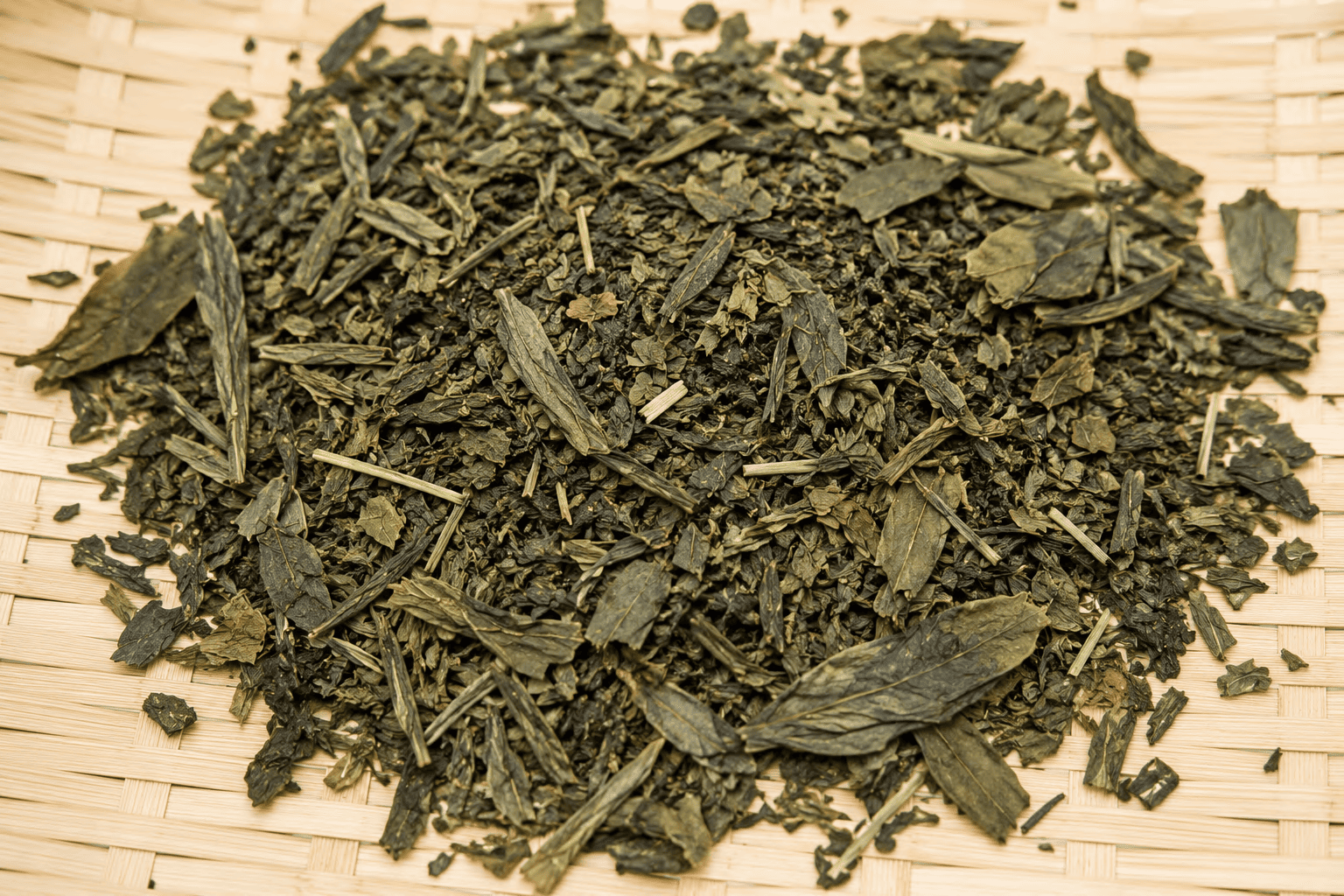
- BP — Broken Pekoe. Larger CTC granules. Slower to brew, produces a bright, full-bodied cup.
- BPS — Broken Pekoe Small. Slightly smaller. Brews a touch faster, marginally more astringent.
- PF — Pekoe Fannings. Mid-size. Common in good loose tea and quality tea bags.
- PD — Pekoe Dust. Very fine. Fast and strong. Most commercial tea bags.
- D — Dust. Finest grade. Maximum colour and strength in minimum time.
Here is the thing the industry doesn’t say clearly: grade describes particle size. It does not indicate quality. A Dust-grade tea from a well-managed second-flush Assam estate can produce a cup that embarrasses a BP-grade tea from a poorly run garden. The grade tells you how it will brew. Not how it will taste.
If you see TGFOP on a CTC tea packet, something is wrong. TGFOP (Tippy Golden Flowery Orange Pekoe) is an orthodox grade — it describes whole-leaf tea with golden tips. The CTC process destroys leaf structure entirely. That grade has no business on a CTC packet.
“Grade tells you how it will brew. Not how it will taste. The garden
decides that.”
Manufacturing Date vs Best Before: The Freshness Gap
This is where most buyers quietly lose money.
Most packaged tea carries a best-before date 18–24 months from production. The implication is that the tea is equally good anywhere inside that window. It is not. Assam CTC black tea is at its peak within 3–4 months of the manufacturing date. The volatile aromatic compounds that give fresh CTC its malty briskness begin to leave the moment the packet is sealed. The tea doesn’t become unsafe after that — it just becomes progressively flatter and less interesting.
A packet manufactured 14 months ago that still has 10 months left on its best-before date is a legal product. It is not a fresh one.
WHAT TO ACTUALLY LOOK FOR
Check the manufacturing date, not the best-before date. If only a best-before date is shown, work backwards — 24-month shelf life means recent manufacture if the date is 2 years away. If it’s only 8 months away on an 18-month product, the tea was made 10 months ago. Garden-direct brands tend to have more recent manufacturing dates because they’re not sitting in a distributor chain.
“Assam Tea” vs. “Blend with Assam”: The Origin Gap
The word “Assam” on a packet can mean three very different things:
Single estate, single origin
The packet names a specific garden or estate. 100% of the tea inside came from that one property. Traceable, seasonal, honest. This is what Kartickbari is — the estate name is on the packet because it’s verifiable and we stand behind it.
“100% Assam Tea”
The tea came from Assam, but from many different gardens blended for consistency and price. Not inferior by definition — this is how most commercial tea works. But “Assam” here tells you about a region of roughly 50,000 square kilometres, not about a specific garden, specific season, or specific standard of care.
No geographic origin claim
“Premium Blend” or “Special Blend” with no region named may contain tea from Assam, Nilgiri, Kenya, Sri Lanka — in any combination. Perfectly legal. Completely untraceable. If there’s no clear origin claim, there’s no way to evaluate it before you brew it.
The Words That Mean Nothing
These appear on Indian tea packaging constantly. None of them are regulated or standardised. Any brand can apply them to any product regardless of quality:
- “Premium” — No legal definition. Can be used on anything.
- “Gold” / “Silver” / “Diamond” — Marketing tier names invented by the brand.
- “Finest” — A superlative with no standard. Completely unverifiable.
- “Natural” — All pure tea is natural. This tells you nothing.
- “Authentic Assam Flavour” — Not a regulated claim. Means whatever the brand wants.
- “Hand-picked” — All quality tea is hand-plucked. Not a differentiating claim unless accompanied by specific detail.
A packet covered in these words with no estate name, no visible manufacturing date, and no specific grade is communicating less than it appears to be.
What to Check Before You Buy
1. Does the packet name a specific estate? Specific estate > regional claim > no claim.
2. What’s the manufacturing date? Within 4 months is fresh. Beyond 8–10 months, the peak has passed.
3. Is it foil-lined or metallised film packaging? Plain paper is a freshness risk.
4. Does the ingredients list say only “black tea” or “CTC black tea”? Anything else is added.
5. Is there a physical estate address? Verifiable address > corporate office.
6. Does the price match the claims? Dramatically cheap “single estate premium” is a red flag.
What the Kartickbari Packet Tells You
We think a packet should communicate clearly about what’s inside it. Ours shows: the estate name (Kartickbari, Bengenakhowa, Assam — verifiable), the product (Assam CTC black tea — type and process named), the grade, and the manufacturing date. No grade inflation. No “Gold” or “Diamond.” No claims we can’t back.
The packet is where the contract between the manufacturer and the buyer begins. Read it like one.
FAQ
Is Dust-grade tea bad?
No. Dust-grade tea is fine-particle CTC — it brews fast and strong. The word “dust” sounds unappetising but it has no bearing on quality. Cheap dust from a blended, warehouse-stored batch is a poor product. Dust from a quality single-estate garden is a perfectly good, brisk cup. Grade is not quality.
Are tea bags worse than loose CTC?
The container is less important than what’s in it. Many tea bags contain low-quality dust-grade tea from unspecified origins — that’s the real problem, not the bag itself. A quality CTC tea bag from a named estate is a better product than cheap loose tea from an unidentified blend. The difference is transparency.
What does the FSSAI number tell me?
It tells you the manufacturer is registered with India’s food safety authority. It confirms they’re operating legally. It says nothing about the quality of the tea inside the packet. All packaged food sold in India must carry it.Internal links: Tea Encyclopedia (CTC Grades: BP, BPS, PF, Dust · Grade · Single Estate) · Blog 02 (CTC factory process) · Blog 01 (why chai tastes different) · About page. CTA: Know what you’re buying. Try Kartickbari — named estate, fresh pack, honest label